Group expenses, with an ending

Events end. Your expense app should too.

CabuTally is one link that holds a whole event: who is bringing the ice, who paid for the meat, and who still owes whom. When it is over you close the books and everyone moves on. It splits the costs of a group trip, a party or a shared house, and nobody needs an account, not even you.

  • Free for events of up to 8 people
  • No account for you or anyone you invite
  • Nothing to install: open it in your browser, or get the Android app
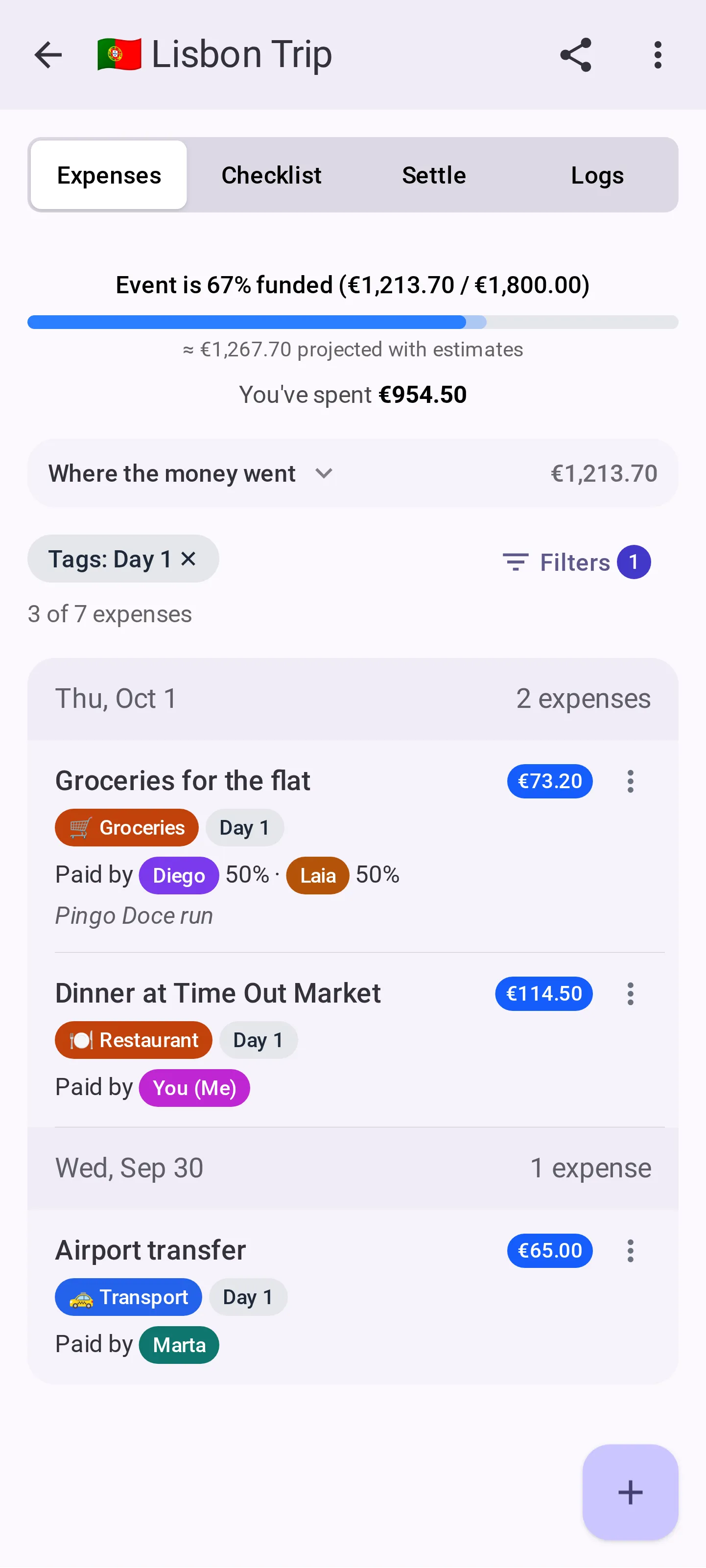
CabuTally on a phone: the Lisbon Trip event, 67% funded, with expenses for groceries, a dinner and an airport transfer, each showing who paid
Get it on Google Play

How it works

Three steps, and the third one is the point

The first two are what every splitter does. The third is the one nobody ships.

  1. Name it and send the link

    Pick a name and a currency, then drop the link in the group chat. You can add people who will never open it, so the friend who only turns up with a bottle still counts in the split.

  2. Everyone piles in

    Guests type a first name and they are in. From there anyone can log what they spent, put their name on the charcoal run, or tick off "book the table".

  3. Close the books

    When the party is over, run a wrap-up pass, freeze the ledger so the numbers stop moving, and settle. Then the event is filed away instead of sitting in an app for the next four years.

Why it is different

Three things the other apps do not do

By default, only you can see what you owe

Splitwise and Tricount show the whole group everything. Here you see the lines you are personally in: what you owe, what you are owed, nothing else. Nobody holds a master ledger of the group, and that includes whoever created the event.

Any single expense can also be marked private, so the two of you who split a round of drinks keep it between you. It still settles correctly, it just stays out of everyone else's view.

"By default" is doing real work in that heading. A group that would rather be open about it can switch on group-wide balances, and a co-host can make that call, not just the one who set the event up. It adds the group's lines underneath your own instead of replacing them, so your own view never gets worse than it started. Private stays the default and is not going to stop being the default.

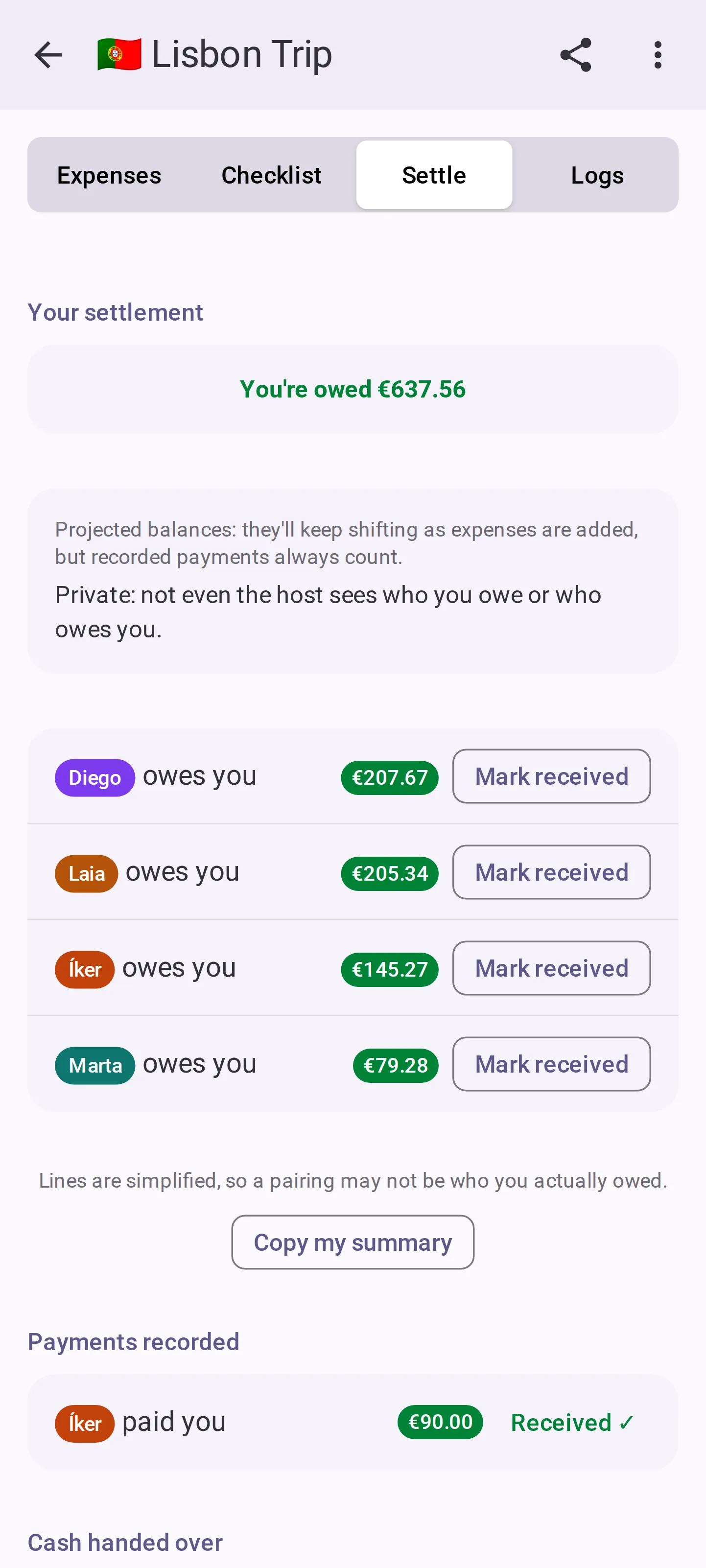
The Settle tab: four people owe you, and a note says not even the host can see who owes whom

The event actually finishes

"Let me archive this trip" has been near the top of Splitwise's own feedback forum for years and it still is not there. Here it is the shape of the whole product. Start the wrap-up review and everyone gets a last pass: claim whatever you took home, and check each plan against what it really cost. Pizza estimated at 40, came to 52.

Then lock the ledger so nothing moves while people pay each other, and close the books.

None of that is a trapdoor. Anyone can reopen the event for the receipt that turned up in a coat pocket, and the payments already recorded still net out correctly against the new total.

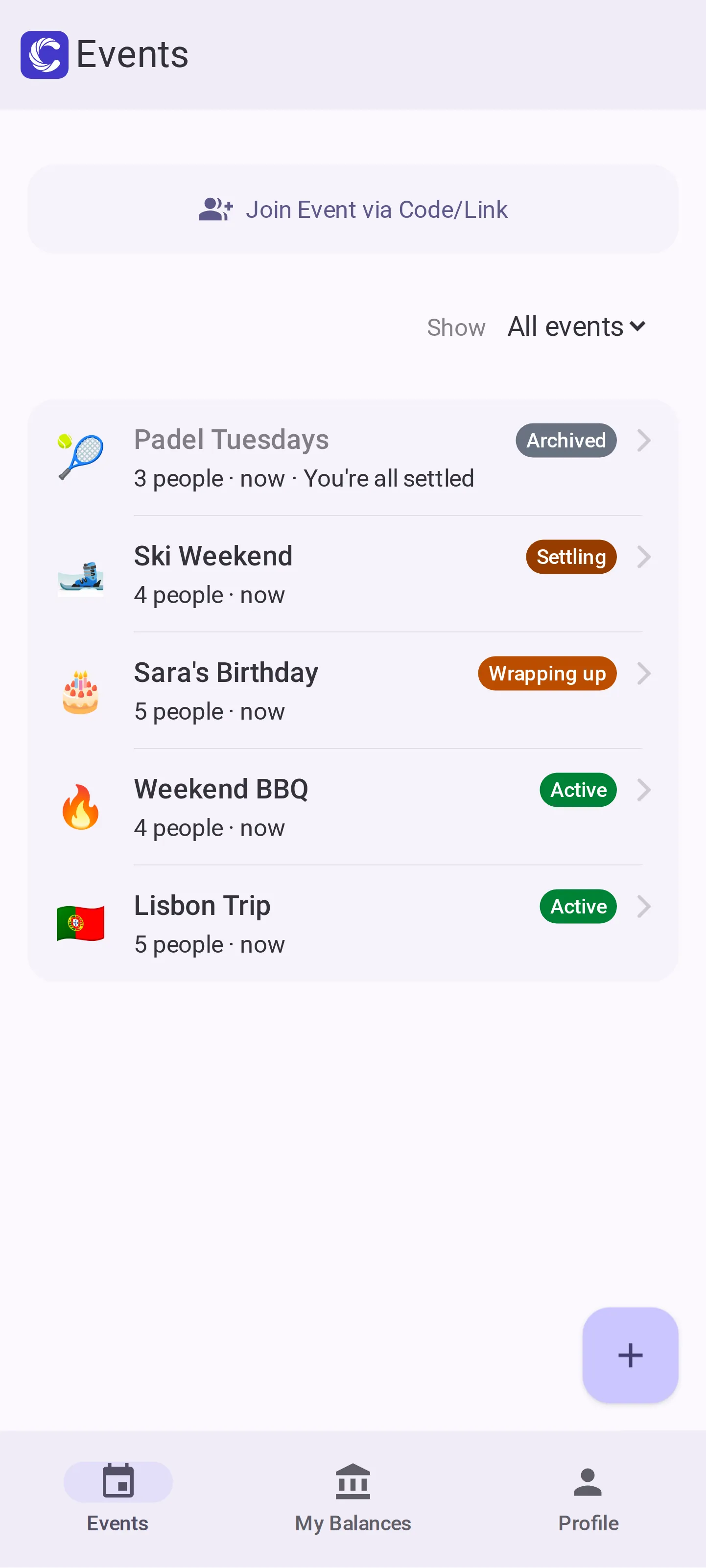
The events list, with each event marked Active, Wrapping up, Settling or Archived

It is not only about money

The same link carries a checklist. Things to bring and plain tasks share one list, and joining one is a single tap. Put a rough price on an item and the funding bar shows where the event lands if the plan gets bought the way it was planned.

Covering something yourself? Mark it "free, on me" instead of typing a price, and it drops out of what the group still has to fund. Buy ten euros of meat and take half of it home, and the group is charged five.

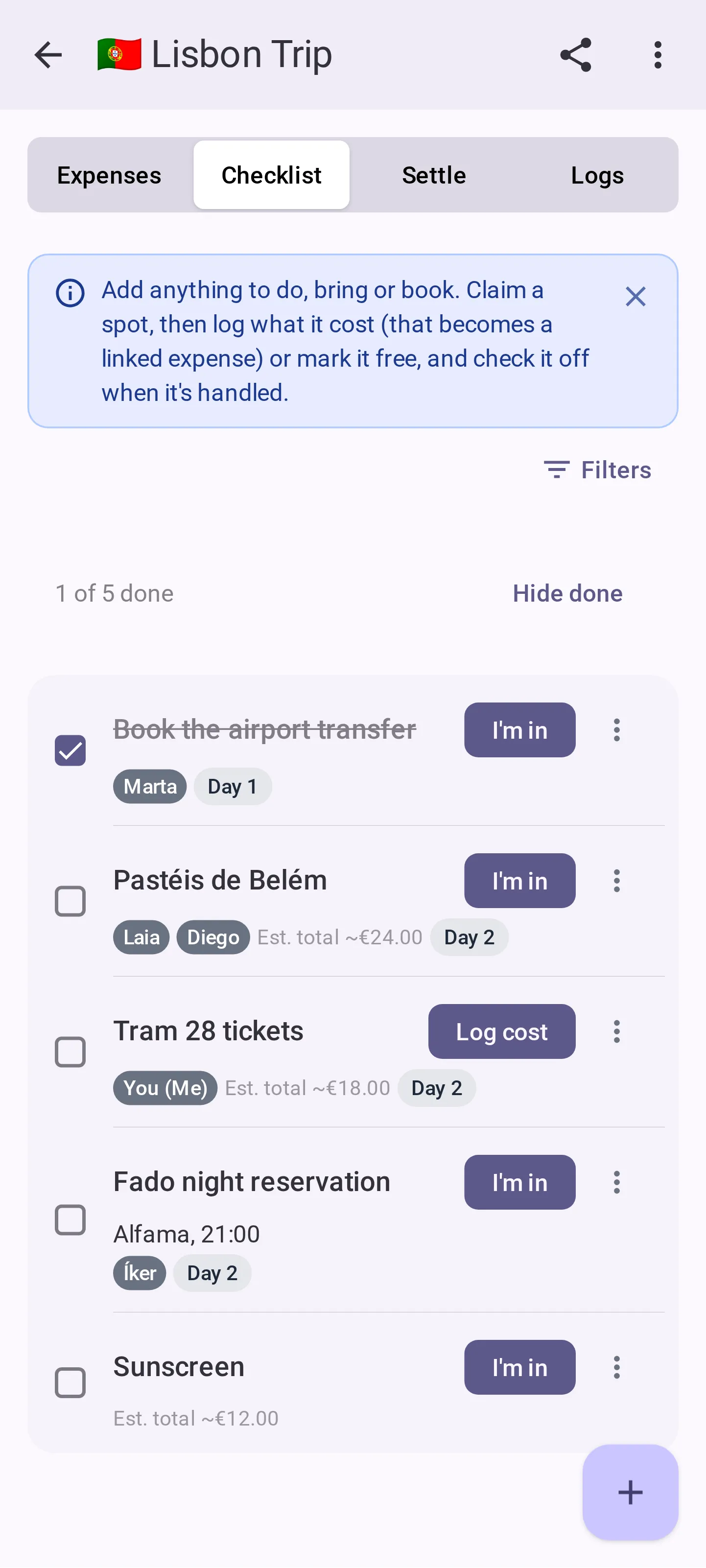
The checklist: the airport transfer, Pastéis de Belém, tram tickets and a fado night, each with who is in and an estimated cost

The ledger

Money, the way it actually moves

Real groups do not pay each other in one clean transfer at the end. The ledger is built for the messy version.

Two people paid for the same thing

One expense can have several payers at different amounts, and be shared by everyone or only by the four people who ate it.

Part of it counts

Someone hands you half of what they owe. Record the half. The line shrinks to what is left, and the person who was owed is the one who confirms it arrived.

Cash before there is a debt

"You are going to the butcher, this covers me." Either person can log that, in either direction, before a single expense exists. It never changes anyone's share, only what you already owe each other.

A payment is a fact, not a tick

Once money is recorded it stays recorded. Someone adding a late expense can never quietly undo it, you just see the difference that is still outstanding.

Say why the number is odd

Every expense takes a note. "Includes the 12 euro deposit." It reads straight off the row months later, when nobody remembers.

Nobody is the treasurer

Debts are simplified into the fewest possible payments, and people settle directly with each other. The person who made the event is not a bank and not the group's accountant.

Side by side

How it compares to Splitwise and Tricount

FeatureCabuTallySplitwiseTricount
Account needed to take partNoYes, for everyoneYes, a bunq sign-up with a phone number
Adding expenses from a browserYes, and it installs like an appYesNo, only in the app
Who can see the balancesBy default, only the two people in each debtEveryone in the groupEveryone in the tricount
Finishing an event for goodWrap-up, freeze, archive, reopen if you need toNoNo
Planning who brings whatShared checklist with tasks and costsNoNo
Hiding one expense from the rest of the groupYes, any expense, and it still settlesNoNo
Daily limit on adding expensesNone, everA few a day on the free plan, with a wait before the button worksNone
What is freeEverything, for up to 8 people per event. A bigger group needs one Event Pass, bought once by anyone in itA few expenses a day, with ads. The rest needs ProEverything, with no paid plan

Put together in July 2026 and last checked in September 2026, from public reviews, the apps' own help pages and their pricing pages. These products change. If something here has gone out of date, write to the address on the privacy page and it gets corrected.

Pricing

What will never cost money

Splitting an event of up to 8 people is free, and these four are not an introductory offer, they are the line we are building against. Beyond that, a bigger group or extras like exporting the ledger are paid: an Event Pass for one event, or CabuTally Pro for every event you host.

  • Adding an expense, foreverNo daily cap, no countdown before the button works, no upgrade prompt in the middle of logging a dinner.
  • Nobody pays per personJoining, adding and settling are free for everyone in an event. A group bigger than 8 needs one Event Pass, bought once by anyone in it, host or guest, and it covers everybody.
  • No ads inside an eventThe ledger, the checklist and the settle-up screen stay clean. There are none anywhere in the app today.
  • No trackers, nothing soldNo advertising pixels and no profile of you. Crashes and page timings go to an error monitor in the EU so the thing can be fixed, and the privacy policy names it.

FAQ

Questions people actually ask

Is CabuTally a free Splitwise alternative?

That is the idea. It splits shared expenses for a group the way Splitwise or Tricount do, but nobody needs an account, there is no daily cap on adding an expense, and the event can actually be closed and archived when it ends. Splitting is free for events of up to 8 people; a bigger group, or extras like exporting the ledger, need an Event Pass or CabuTally Pro.

Do I really not need an account?

Really. You type a display name and you are in that event. No email, no password, no confirmation link. The name is per event, so you can be "Dad" at the family lunch and "Wil" on the ski trip. You only need an account to buy an Event Pass or Pro, or to keep your events when you change phones, and even then it stays optional for everyone else.

Does CabuTally touch the money?

No. It is not a payment app: it never moves money between you and never sees your bank details. It keeps track of what happened, and you pay each other however you already do it.

What if I close the tab, or lose my phone?

Closing the tab is fine. Your browser remembers who you are in each event, so the link drops you back in days later. If you lose the device itself, someone still in the event can send you a one-time link that gets your new browser into the same seat. With an optional account, signing in on the new phone brings every event back.

Can the host see everyone's debts?

Not by default, and not for being the host. The host is just whoever created the event, and they see their own lines like everybody else. There is one way group balances become visible: a setting that shows them to the whole group. A co-host or the host can turn it on, it applies to everyone equally, and it never gives one person a view the others do not have.

What about the friend who never opens the link?

Add them as a placeholder. They count in every split, they can be paid back, and they can even be the one who fronted the cash. If they do open the link later, they tap their own name and take the seat over instead of turning up twice.

Does it work with no signal?

Adding an expense, adding a checklist item or pricing one all queue up and send themselves when you are back, including after the phone has killed the tab. Things where only one person can win, like claiming an item or recording a payment, are switched off until you reconnect, and each one tells you why.

Can we use more than one currency?

An event has one currency and it is a label rather than a conversion. If a trip involved two currencies, convert before you type the amount. Converting inside an event is not built.

What is it still missing?

Within a single expense the split is equal between the people sharing it. That one is on purpose rather than pending: if four people ate and one only had a starter, that is two expenses, not a box full of percentages. There are no receipt photos, and exporting the ledger is a paid extra. And anyone holding the link can join, so share it the way you would share a group chat invite.

Can ChatGPT or Gemini set up the event for me?

Nearly. When you plan a trip or a dinner with an AI assistant, ask it for a CabuTally link. It can fill in the event name, the other people, a budget and the currency:

https://app.cabutally.com/new?name=Ibiza%20weekend&people=Luis,Marta&budget=300&currency=EUR

Opening it shows the new-event form already filled in. Nothing is created until you add your own name and tap Create, and every part of the link is optional.

Do I have to install anything?

No. The link opens in any browser and that is the whole app. If you would rather have an icon on your phone, there is an Android app onGoogle Play, and the web version can also be added to your home screen on any phone. Installing is a convenience, never a requirement: the people you invite can join from the link alone, and nobody needs an account either way.

Got something coming up?

Make the event now, send the link, and let people add themselves while you get on with the shopping.

Google Play is a trademark of Google LLC.